Essano & Zeducation: Building Literacy, Numeracy and Confidence on the Factory Floor

Essano and Zeducation partnered to solve a costly, everyday problem on the production floor: low literacy, numeracy and digital confidence were driving packaging errors, thin health and safety reporting, and a heavy reliance on a handful of capable staff to do the documentation for everyone else.
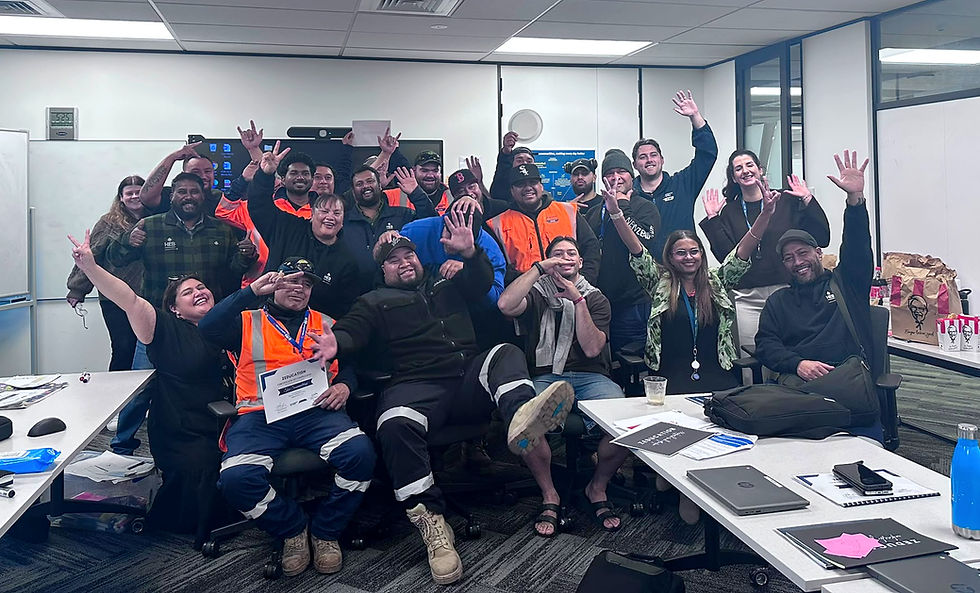
Over 20 weeks, Zeducation delivered a workplace literacy and numeracy programme to 23 Essano employees, contextualised to the real work of the Māngere plant and funded through the TEC Employer-led Workplace Literacy and Numeracy Fund.
The results were measurable and immediate. Packaging and labelling errors fell by around 95%. LNAAT numeracy scores rose 96.1% and reading scores 30.9%. And a group of learners who once described themselves as "not very smart" are now completing documentation independently and being coached toward greater responsibility.
Here is how we did it.
Case Study Overview
Partners: Essano Limited & Zeducation Limited
Programme: Workplace Literacy and Numeracy (TEC Employer-led Fund)
Timeframe: 18 April 2025 – 29 August 2025 (20 weeks)
Location: Auckland
People Trained: 23 employees across three cohorts (manufacturing & packaging)
Services Provided by Zeducation: Needs analysis, contextualised learning design, onsite tuition & facilitation, LNAAT assessment.
Outcome: ~95% reduction in packaging errors; LNAAT numeracy +96.1%, reading +30.9%; broader H&S reporting; embedded label-verification process

The Challenge
Essano's original application identified five productivity problems tied to low literacy, numeracy and digital skills. On the floor, this looked like:
15 to 20 packaging and labelling errors every week — label mix-ups between similar products, incorrect shipments, and the rework and customer complaints that follow.
·Health and safety reporting carried by two or three people. Hazard and incident forms came almost entirely from the H&S reps, leaving the organisation's risk picture incomplete.
·Documentation quietly delegated to the few. Stronger colleagues completed forms, calculations and records on behalf of others — masking true skill levels and creating what the Operations Manager called a "false economy."
Digital tasks avoided. Most staff steered clear of email and Excel entirely, bottlenecking data entry on supervisors and management.
Underlying all of it was confidence. Several learners had spent years avoiding workplace documentation for fear of being "found out," and some considered withdrawing the moment assessments were mentioned.
Our Response
Zeducation took an end-to-end, people-first approach built around the real work of the Essano floor.
Needs analysis and contextualised design
We built the programme around the tasks learners actually meet every day — reading product labels, completing hazard forms, calculating batch quantities, recording production totals. Grounding the learning in real work made the relevance immediately visible and reduced the feeling of abstract "schooling."
Onsite delivery in small cohorts
We delivered 40 hours per learner over 20 weeks, onsite at Māngere and during work hours, in small groups of up to eight across three cohorts. Learning where they work, alongside colleagues, kept the barrier to entry low.
A safe, confidence-first learning environment
Early sessions reframed the LNAAT assessment as a helpful tool, not a test — a critical move that kept learners who almost withdrew in the first weeks. Making mistakes was normalised as part of learning.
Buddying and guided practice, not doing it for them
We worked with H&S reps and stronger team members to support colleagues through hazard identification and form completion, rather than completing tasks on their behalf. Confidence was built through guided doing.
Gradual digital exposure
Digital literacy was introduced progressively, starting with familiar tools (Microsoft Teams for data entry) before extending to email and Excel, so technology never became the anxiety barrier that stalled learning.
Management coaching alongside the programme
Delivery ran hand in hand with active leadership from Essano. The Operations Manager held individual coaching conversations with reluctant learners and used weekly toolbox talks to normalise literacy and numeracy as workplace skills, not personal deficits.
Outcomes
Capability — errors down around 95%. Packaging and labelling errors fell from an estimated 15 to 20 per week to approximately one every two weeks. A formal label-change verification process, born directly out of the literacy training, is now embedded in daily operations.
Numeracy — LNAAT scores up 96.1%. The cohort's average LNAAT numeracy scale score rose from 465 to 912, matching the accuracy gains management observed in batch calculations, production totals and stock recording.
Reading — LNAAT scores up 30.9%. The average LNAAT reading scale score rose from 603 to 789, a measurable uplift in reading with understanding and communicating in writing, consistent with a shift toward Steps 5–6 on the Learning Progressions.
Confidence and application. Learners now complete hazard reports, leave requests and production documentation independently, interpret SOPs without leaning on peers, and speak up in toolbox talks. Health and safety reporting has spread well beyond the H&S reps, with the committee now actively coaching colleagues.
Culture. Documentation is becoming a shared responsibility, not the job of a capable few. Learners who once avoided technology are now active on Teams, email and Excel.
Results at a Glance
Productivity Issue | Baseline | Post-Programme |
Packaging & labelling errors | 15–20 errors/week | ~1 error every 2 weeks (around 95% reduction) |
LNAAT numeracy (scale score) | 465 | 912 (+96.1%) |
LNAAT reading (scale score) | 603 | 789 (+30.9%) |
H&S form completion | 2–3 forms/week, H&S reps only | Multiple forms/week from across the team |
Digital tool usage | Most staff avoided email and Excel | Learners entering data on Teams; growing email and Excel confidence |
In the Client's Words


Ready to build capability in your workplace?
If low literacy, numeracy or digital confidence is quietly costing your business, we can help. Book a chat with the Zeducation team to talk about a programme built around the needs of your business and workforce.


Comments